Before you buy
Will a website really bring me more customers?
Honestly, a website will not create demand on its own — your Facebook page, your reputation and word of mouth still bring people to you. What a website does is stop you losing the people who are already asking. Your prices are visible, so buyers stop waiting for a reply; your business looks established, so they trust you enough to pay; and you share one link instead of answering the same question fifty times. That is where the sales were slipping away.
I’ve been let down by a developer before. Why is this different?
Because every step is designed so that cannot happen again. You get a written, fixed price before anything starts. You pay half to begin, not everything upfront. You watch the work take shape on a private link, so nothing is hidden until the end. You approve the design before it is locked. And at handover, the site or app, the logins and the domain are all in your name — if we ever parted ways, you would keep everything.
I already sell on Facebook. Why do I need a website?
Facebook is where customers discover you. A website is where they decide to buy: every product and price in one place, presented with the polish of an established brand. Your Facebook page keeps working alongside it — we link the two so customers move easily between them.
How much does it cost?
Every price is fixed and published above. Websites are a one-time build in three single-page packages: Startim at K250 (up to 5 featured products), Simatim at K500 (up to 15 products by category) and Bikwan at K750 (up to 30 products, with priority support). You supply your logo and content. Domain registration and hosting are priced separately if you need them. Product videos are priced per video: Lukim (10 seconds) K29, Save (15 seconds) K39 and Laikim (30 seconds) K69 — order as many as you need. Web apps — from rapid prototypes to full platforms with logins, dashboards and built-in AI — start from K2,500 for a starter app and from K5,000 for a custom web app, with the final price quoted per project. Website care is K25 a month (or K250 a year), with the first three months included, and a custom .com domain is K90 a year. Web app care is quoted per app, from K150 a month. You pay half to begin and half at launch: no hourly rates, no surprise fees.
What do I need to get started?
Your business name, your logo if you have one, photos of your products, your prices and the best way to reach you. If your photos are not strong enough, we will tell you honestly and help you get better ones.
How long does it take?
Startim sites typically go live in 3–5 working days, Simatim in 7–10 and Bikwan in about 14. Product videos are delivered in 1–2 working days, and a first web app around six weeks. Working towards an event or launch date? Tell us at the start and we will plan around it.
How are the product videos made, and what is a “take”?
We produce product videos with generative AI, directed from your product photos, logo and brief — so there is no shoot, no crew and no travel, and your videos can be ready within one or two working days. Each attempt to generate a video is a take. Every video includes one take, delivered as made, without editing or revisions — if you would like a different version, simply order another video at the same tier price.
Like most AI-generated media, the videos may carry an invisible digital marker that platforms use to identify AI content. It does not affect how your video looks.
What does “Priority support” mean?
Priority support means your messages go to the front of the queue, with a reply the same working day.
How do I pay?
By bank transfer to our business account. For websites and apps: half to reserve your place, the balance on launch day. Product video orders are paid in full before we begin. Website care can run as a standing order, so there is nothing to remember. What happens to your deposit if you cancel is set out in our terms.
Do you make software of your own?
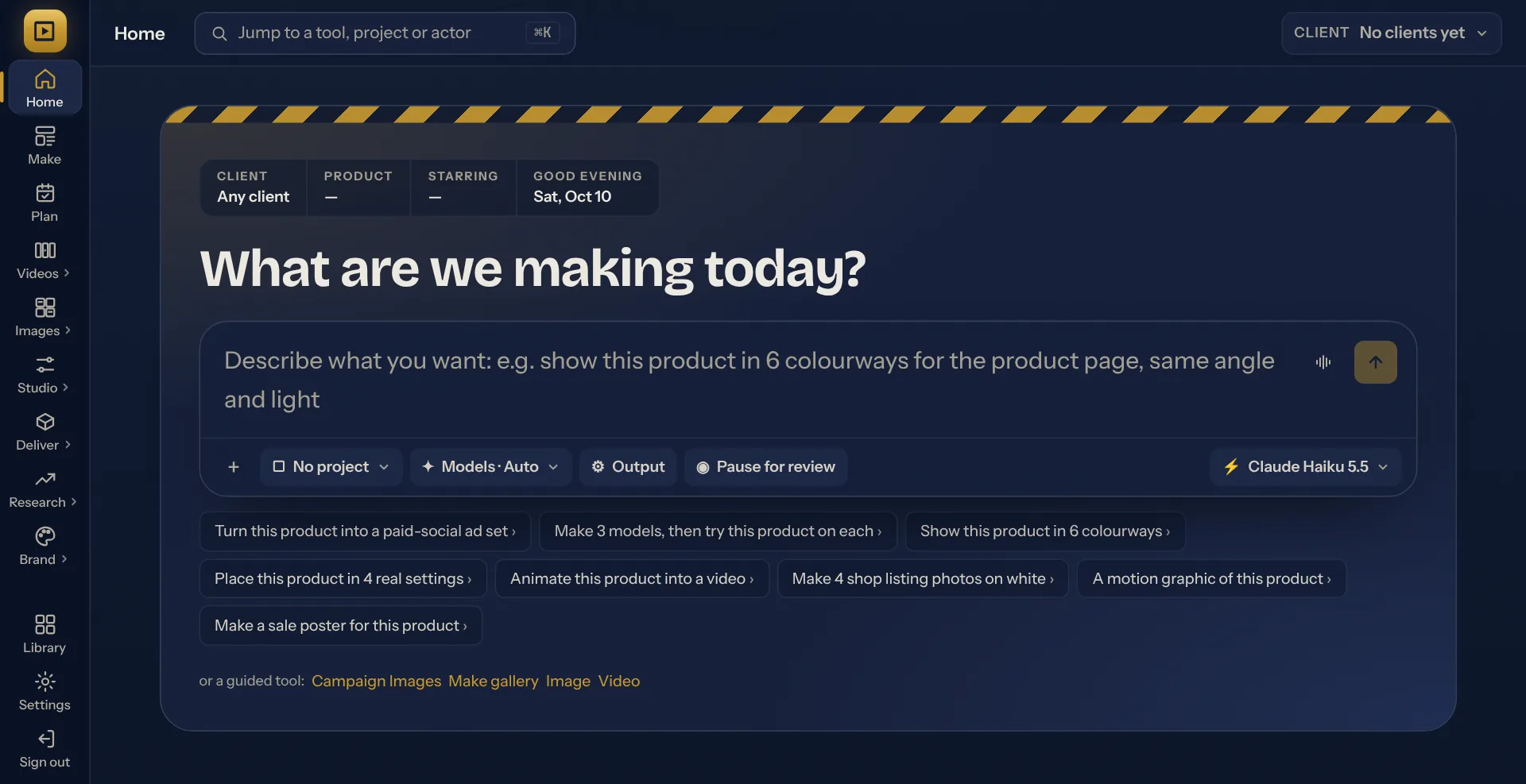
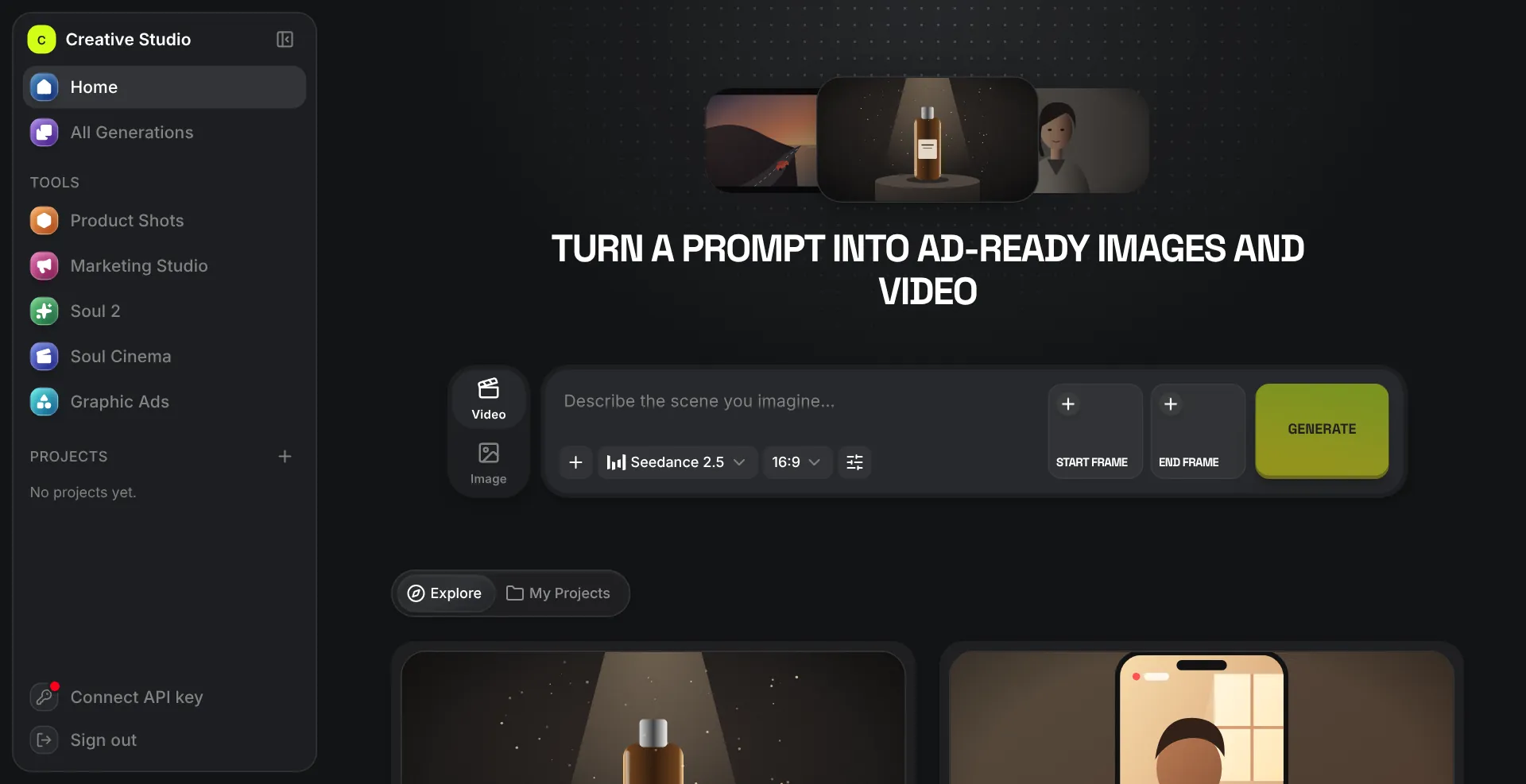
Yes. Clearcut, the private studio we use to make every product video, and Creative Studio, our image and video studio, are software we built ourselves, and we build client apps the same way. Neither is for sale. We plan to offer some simple tools of our own to PNG businesses later, and we’ll announce each one here when it’s ready.
Working together
Do you work outside Port Moresby?
Yes. We are based in Papua New Guinea and work with businesses nationwide. Almost everything happens by email and phone, and we will tell you upfront if a project needs us on site.
Can you build AI into my business?
Yes — wherever it saves real time. That might be an assistant that answers customer questions on your website or WhatsApp, day and night; drafting replies and product descriptions; summarising orders and bookings; or reading the details from uploaded documents so nobody has to retype them. We recommend AI only where it earns its place, and we explain exactly what it will and will not do before you commit.
Who owns the website and the domain?
You do. Every package includes a free web address — a non-custom domain, such as yourbusiness.netlify.app — so you can go live without buying a domain first. If you want your own domain (for example yourbusiness.com), it is registered in your business name, not ours. Once the project is paid in full, the site, the photos and the videos are yours. At handover you receive the logins and a walkthrough of how everything works — and if you ever decide to move, we hand everything over and help you do it.
After launch & changes
What if I need changes after it goes live?
Every update after handover is a Change Request. Tell us what you need — new products, new prices, a new page, a new feature — and we reply with a fixed price and a timeframe. Nothing begins until you approve it in writing, and nothing is charged without that approval. It is exactly this that keeps your original build price fixed.
What happens after it goes live?
Launch is not the end of our work. For 30 days after go-live, anything that is broken or not working as agreed is fixed at no charge. After that, anything new is a Change Request, quoted before we begin. Hosting, monitoring and backups are included for the first three months; after that they run on website care at K25 a month, if you choose it.
What exactly counts as a Change Request?
Anything that changes the site or app after handover: new products, new prices, new pages, new photos, a new feature, or a redesign of something you already approved. It never includes fixing something we built wrong — that is our responsibility, free, within the first 30 days.
Each Change Request is quoted at a fixed price before work begins. You approve in writing, we deliver, then you pay. Small changes usually cost small amounts — and we will always tell you if something is not worth doing.
What is not included?
Website prices do not include a custom domain, website care after the first three months, search engine optimisation (SEO), logo design, product photography or printed materials. Video prices do not include paid advertising budgets or editing, and each video is a single take. If your project needs any of these, we tell you upfront and quote it separately — never added quietly later.
What if I want to change my mind during the build?
That is entirely normal, and it is what the refine step is for. During the build, any change to the agreed scope is quoted before we make it, and the decision is yours. Anything requested after the design is locked becomes a Change Request. Working this way is what keeps your price fixed instead of creeping upward.
Is hosting included in the website price?
The first three months are. Every website includes a free web address (a non-custom domain, such as yourbusiness.netlify.app) and three months of website care from launch. After that, website care is K25 a month (or K250 a year) and covers hosting, HTTPS, uptime monitoring, backups and priority support. A custom .com, .net or .org domain is K90 a year. Prefer not to pay monthly? We move the site to your own free hosting account — you own it, and there is no monthly fee. Web apps run on a separate platform, so app care is quoted per app, from K150 a month.
 Clearer Days